Algorithms, Multichannel Data
Capturing, and Spatial Analysis

Updates

  • Narrowband SID: First Pilot Results

    For the first time, narrowband spectral immission directivity (SID) has been tested outside the lab and in real-world conditions. Over the course of three separate 24-hour measurement campaigns at different locations, we captured and analyzed environmental noise using this new approach.

    The results (see figures below) show spectra for specific directions, calculated directly from the recorded data. What makes this exciting is how SID combines time, frequency, and direction into a single picture of the sound environment.
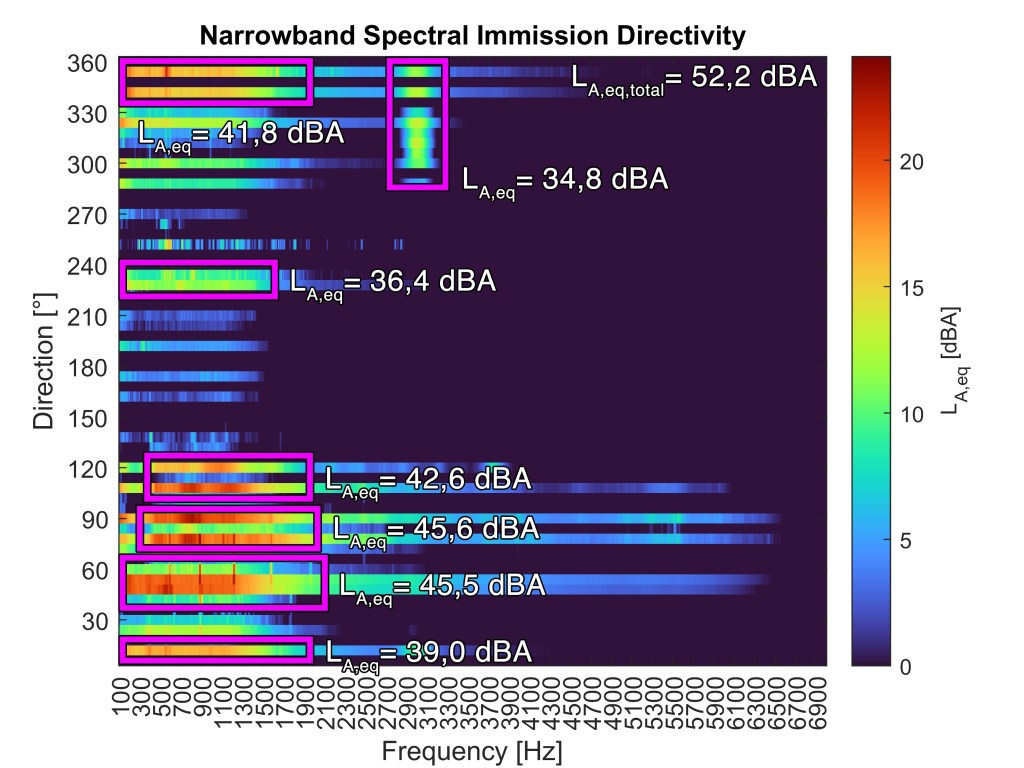
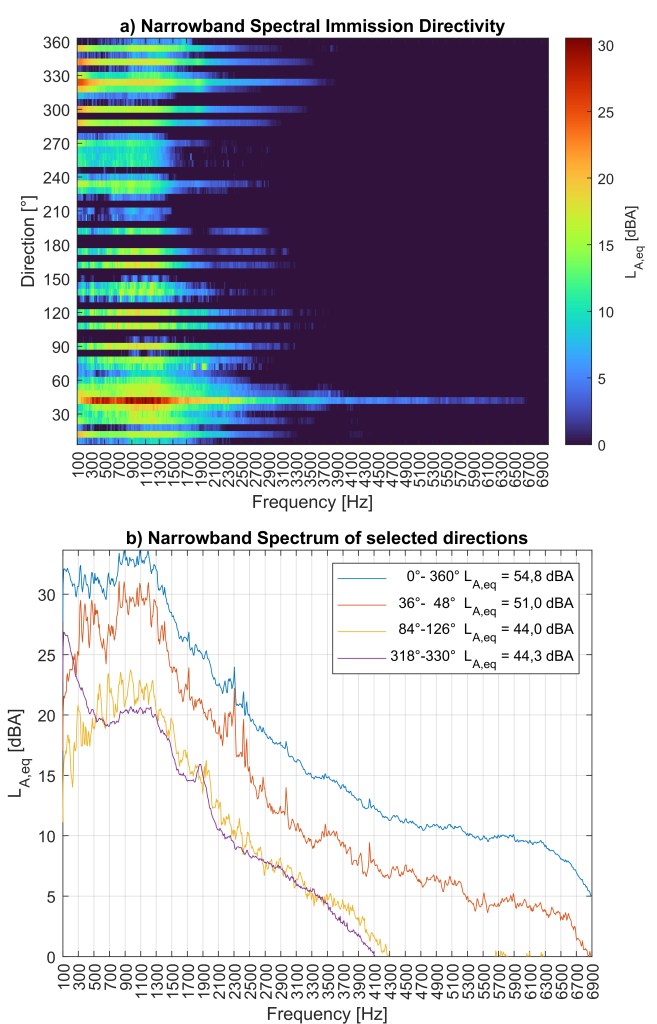
    Figure 1: Measurement 1
    Figure 2: Measurement 2
    Figure 3: Measurement 3

    The results will be presented at the 11th Congress of the Alps Adria Acoustics Association.

  • Research paper published in Applied Acoustics

    I’m proud to announce that my latest research has been published in Applied Acoustics (IF = 3.4, Ranked 6th out of 40 journals in Acoustics category).

    The paper, titled “Application of spectral immission directivity for long-term environmental noise measurements,” introduces a novel approach to capturing and analyzing environmental noise by leveraging the concept of spectral immission directivity. This method provides a new perspective on how sound energy is distributed directionally across the frequency spectrum, offering improved tools for long-term environmental noise monitoring and analysis.

    This work not only deepens our understanding of complex acoustic environments but also establishes a foundation for more accurate and spatially-aware environmental noise assessments. The potential applications range from urban planning and policy development to noise mitigation strategies and advanced sensor design.

    Read the full article here.

  • Attendance at Forum Acusticum Euronoise 2025

    I’m excited to announce that I will be attending the Forum Acusticum Euronoise 2025, the 11th European Conference on Acoustics and Noise Control Engineering, organized by the European Acoustics Association (EAA). The conference will take place from June 23–26, 2025, in the city of Málaga, Spain.

    This premier event brings together leading experts, researchers, and professionals in acoustics to explore the latest developments in noise control, vibration, and acoustics. The technical program will feature a comprehensive range of sessions, keynote presentations, and technical activities aimed at advancing our understanding and application of acoustics.

    I’m looking forward to engaging with the global acoustics community, sharing insights, and exploring new advancements in the field.

  • The Spatial Dimension of Sound

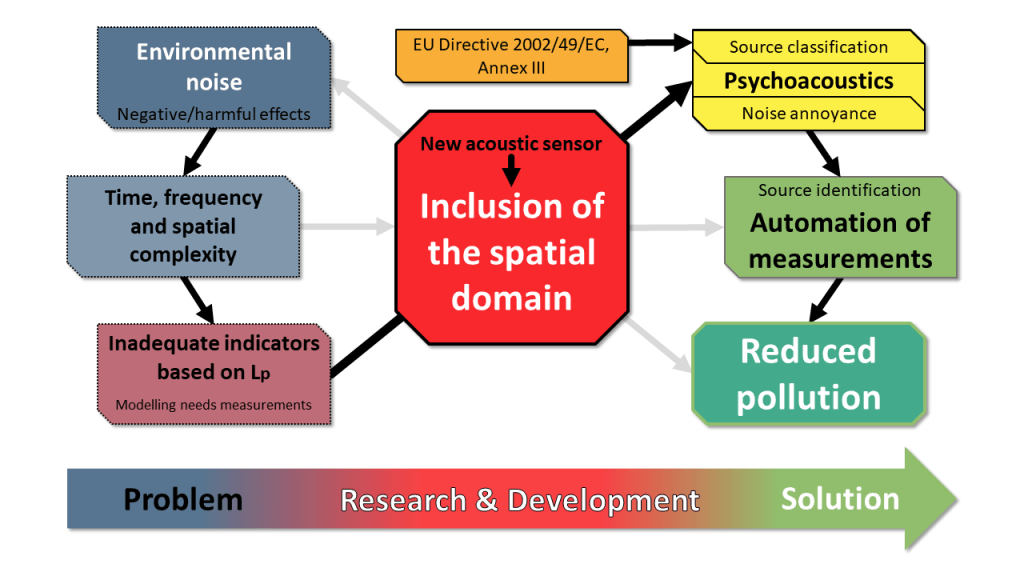
    The project aims to research the spatial domain of sound—an area that remains largely overlooked in current practice. The core objective is to develop an algorithm and a microphone antenna capable of assigning a direction of immission to each frequency, effectively adding a fourth dimension—direction—alongside amplitude, frequency, and time in acoustic measurements.

    This new approach will first be applied to environmental noise measurement and monitoring, where current methods often fail to capture the full complexity of urban noise pollution. By introducing immission directivity, we can better identify sources, improve classification, and support smarter data analysis.

    If successful, this methodology could be extended beyond environmental acoustics—to other areas of sound research and even to fields involving multichannel sensor data. It opens a path toward more accurate, informative, and meaningful measurements in a range of scientific and engineering applications.

  • The Journey Begins: My Postdoctoral Research Project Is Underway

    I’m excited to share some wonderful news—I’ve been awarded a postdoctoral research project, funded by ARIS (Slovenian Research and Innovation Agency) and hosted at the Faculty of Mechanical Engineering, University of Ljubljana!

    Official announcement

    This marks the beginning of a new chapter in my academic and professional journey. The project will allow me to deepen my research in the spatial domain of acoustics, work alongside leading researchers, and contribute to meaningful developments in the field.

    I’m deeply grateful for the support I’ve received along the way—from mentors and colleagues to friends and collaborators.